iMatch
The CRM that took a matchmaking firm off paper.
- Role
- Founding Product Manager, The Standard Agency
- Timeline
- December 2023 to present
- Platform
- GW Apps (low-code), with an AI search tool on top
- Tools
- GW Apps, Figma, Claude
- Problem
- The Standard Agency ran on paper. Files got lost, and matchmakers could only remember the singles they'd met recently.
- My role
- I owned it. I learned how every team worked, then built the data model and every view.
- What I built
- A CRM and matching system covering the sales pipeline, matchmaking, and commissions. Later, an AI search tool for matchmakers.
- Result
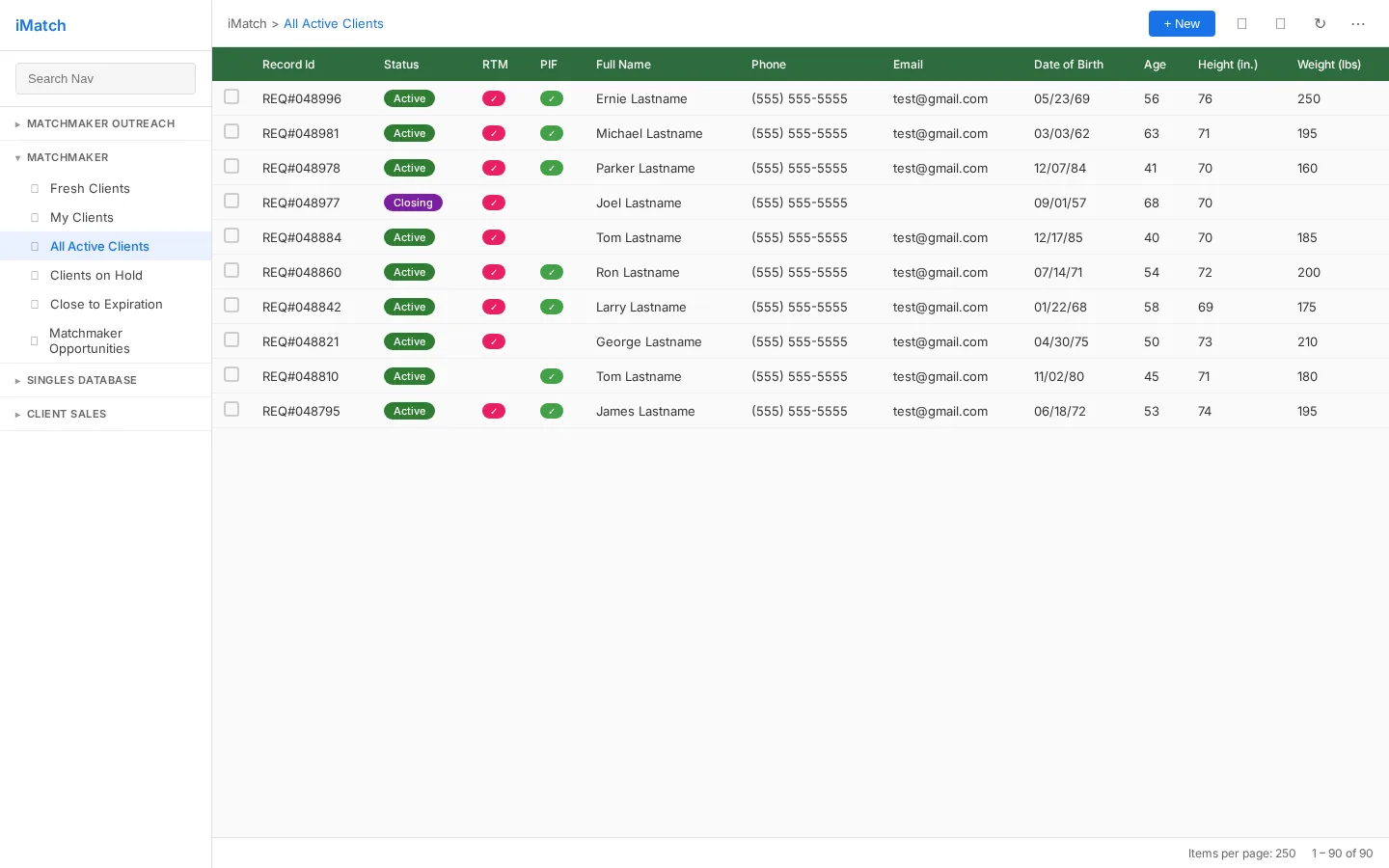
- The whole business runs in it. 19 people across lead generation, sales, matchmaking, recruiting, and admin use it every day.
- What I'd change
- Add automation sooner.
- 19 daily users across 5 teams
- 60+ views
- 15,000+ client records
Problem
The Standard Agency is a high-end matchmaking firm. It has two groups of people to keep track of: paying clients, and the singles they get matched with. When I started, all of it was on paper. Client files lived in cabinets. Singles were on printed sheets with handwritten notes.
That caused real problems. Files went missing. A matchmaker could only match from the singles they happened to remember, which usually meant the recent ones. The sales pipeline was spread across people and nobody could see it as a whole. Nothing was automated.
What I did
My users were my own coworkers, so I couldn't guess. I sat with each team and watched how they worked, then interviewed every department. I mapped the sales and commission pipeline with the owner and the sales staff, together, so it matched how they actually got paid.
We looked at Salesforce and HubSpot. Neither fit. This had to be a CRM and a matching system at the same time, and building it custom on GW Apps was cheaper at our size.
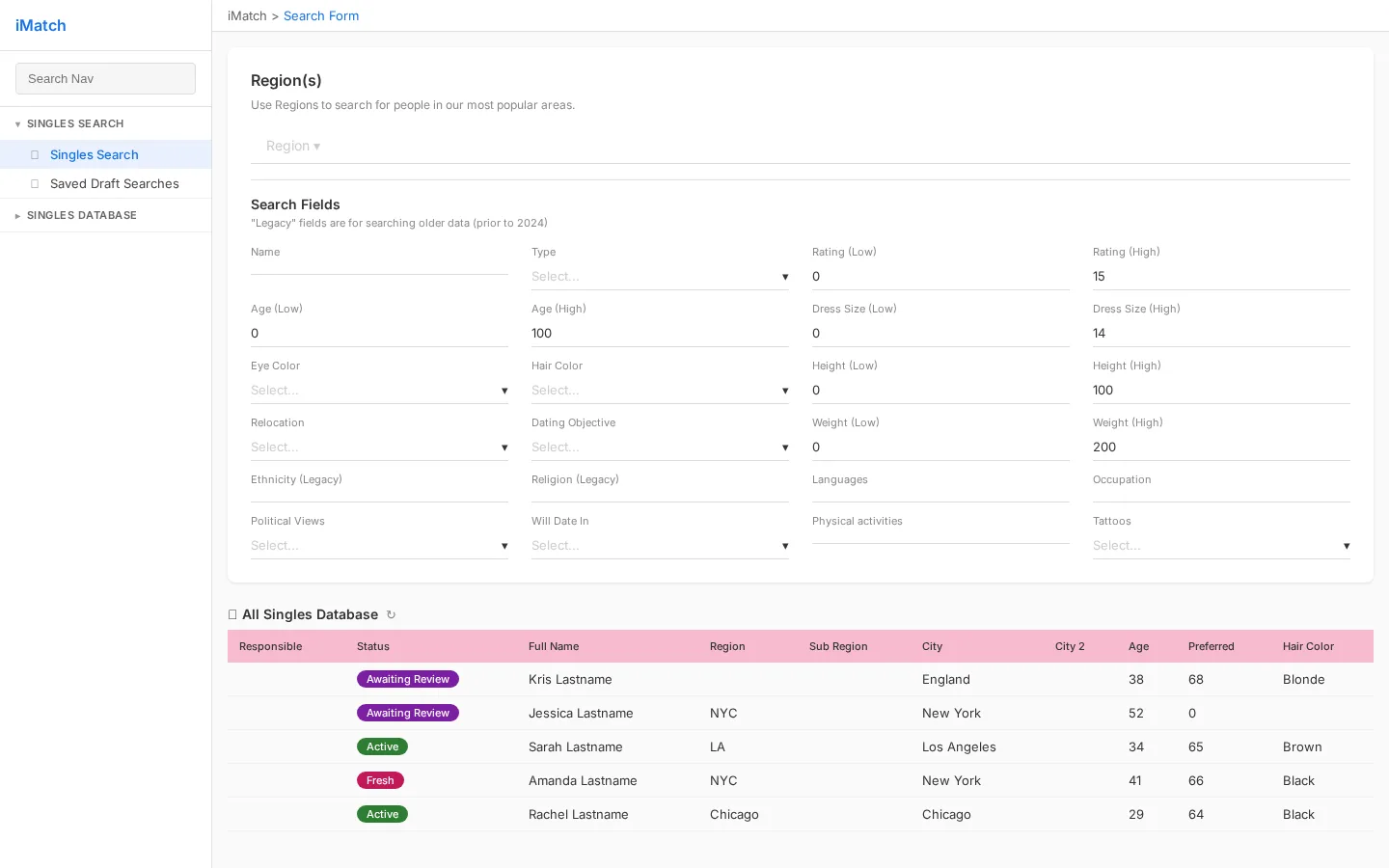
I shipped singles search first, because that was the biggest pain. To make it work I digitized and organized every singles record myself. There was pushback early on. Adoption ended up faster than I expected, and I think that's because the staff helped shape it from the start.
What I built
- Singles Search. 20+ filters with live results on the same page, so a matchmaker can adjust and watch the pool change. Saved searches rerun as new singles come in.
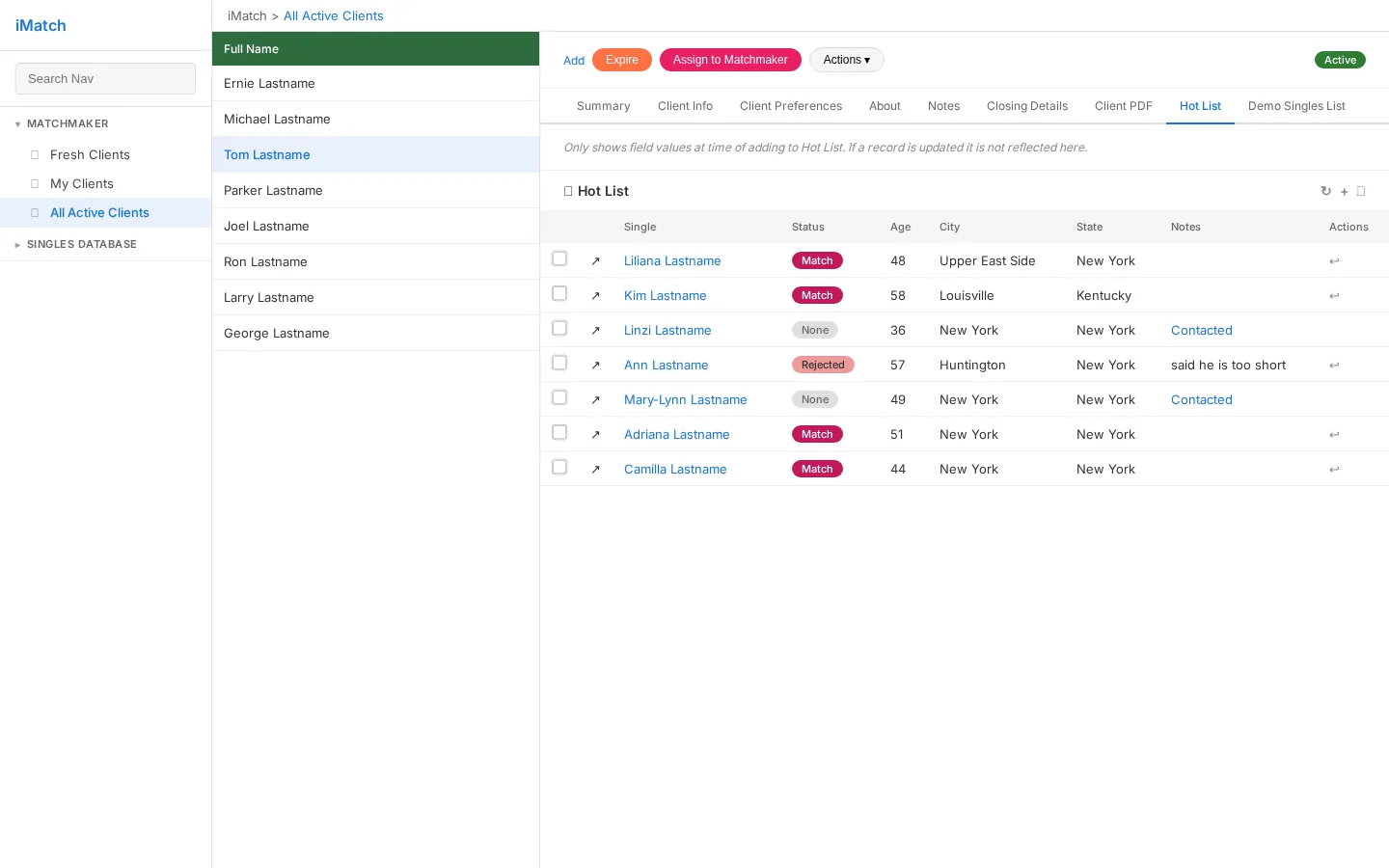
- Hot List. A matchmaker's shortlist for each client, with notes on why things did or didn't move.
- Conflict Checker. A rep types in a phone number and sees right away if that lead belongs to someone else. It ended a lot of arguments.
- Commission tracking. One deal can pay out in up to four installments. Each one is tracked, with an aging report for what's still outstanding.
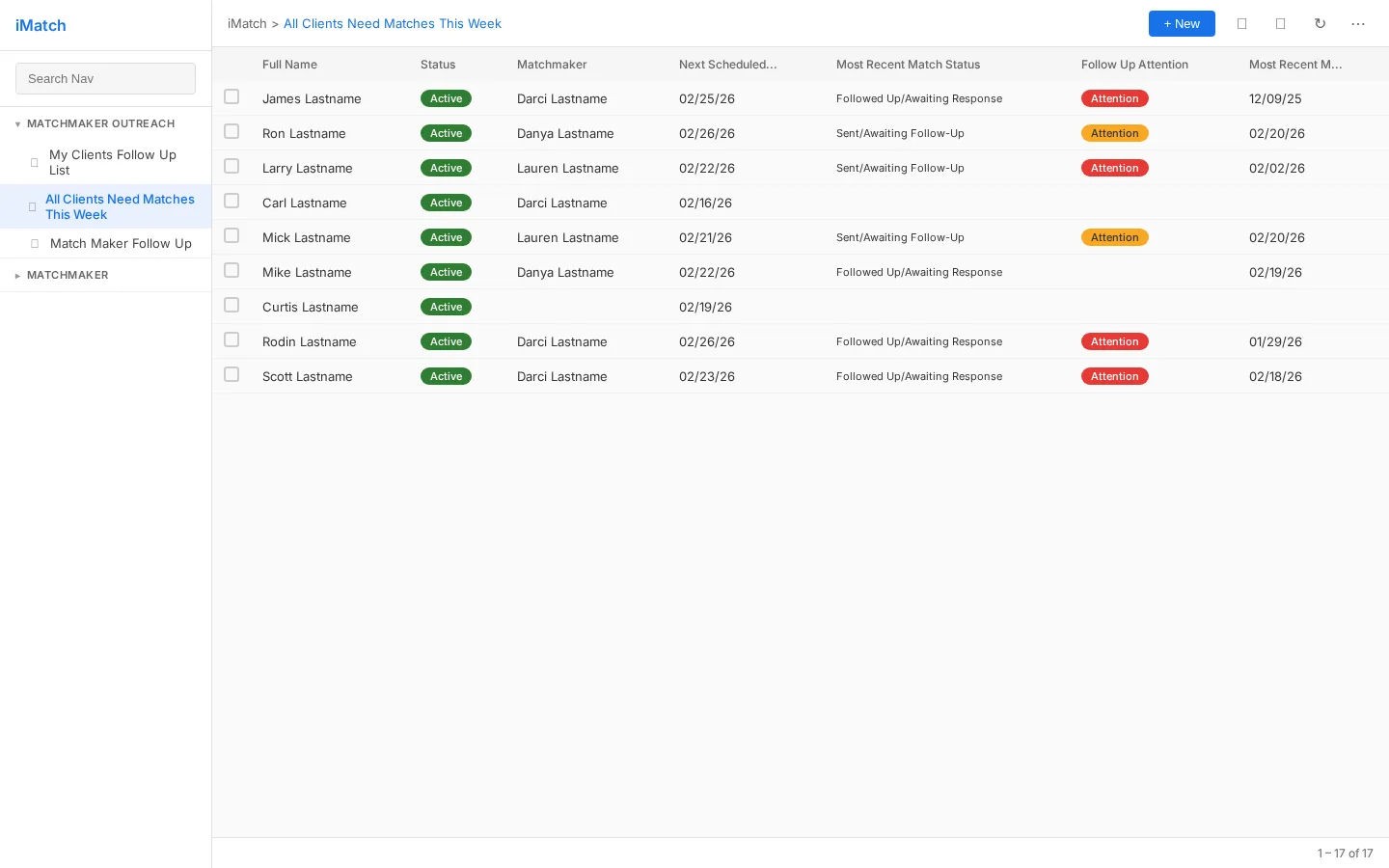
- Outreach dashboard. Every client who needs a match this week, with a badge that goes yellow then red as time passes.
- Demo Singles. Sales can show a prospect real profiles from the pool before they sign, without making an introduction.
Each nav item is a real job someone does. If a matchmaker's morning starts with who needs a match this week, there's a view with exactly that name.
Adding AI: the matcher
The newest piece is an AI search tool for matchmakers. A matchmaker enters the client they're matching for and describes what that client wants, in plain language. The tool searches the full database of 3,100 singles and brings back the best fits.
It replaces a lot of filter clicking with one sentence. A new version is in development now, so the screens here are representative of where it's headed.
What's next
We're rebuilding iMatch as a custom system with AI built in. It will work alongside The500 app, with records kept in sync between the two.